Part two, 6 minutes read.
In the previous part, we talked about the guerilla marketing theory, the psychology of the unexpected. How unexpected moment captures attention, how emotions fuel sharing, crowds create crowds, the stickiness of discomfort and the tiny dopamine hits, that can come from novelty.
This time I collected some of the real-world campaigns that used those principles. We also look at some numbers, by which the campaigns’ effect can also be measured.
A quick note: guerrilla marketing isn’t always “zero spend.” Often, there’s some placement involved. But in classic guerilla, the heavy lifting is done by idea. Attention “earned”, not bought.
The Blair Witch Project (1999) – “Is this real?” as a strategy.
In 1999, a no-name indie horror film The Blair Witch Project became a cultural phenomenon – thanks to a clever guerrilla marketing campaign. The filmmakers crafted an elaborate fiction around the idea that the events were real.
They posted missing-person posters of the actors on college campuses and had IMDb list the cast as “missing, presumed dead.” An official movie website presented fake police reports and “found footage” evidence, drawing in curious viewers.
The site attracted over 20 million visitors before its release, a big number for the dial-up era. Pre-release buzz translated into box office success: The Blair Witch Project was produced for about $35,000–$60,000, yet it grossed $248 million worldwide. It is still considered one of the most profitable films ever. Its promotion relied on strong word-of-mouth, amplified by guerrilla tactics.
The psychological mechanism:
- It was out of place.
- Built on uncertainty (orienting reflex)
- A story people couldn’t resist retelling.
Burger King’s Subservient Chicken (2004) – Interactive absurdity that people had to share
Fast-food chain Burger King reinvented how brands engage online with its “Subservient Chicken” campaign in 2004. To promote a new chicken sandwich, BK and agency CP+B launched a quirky website featuring a man in a chicken suit who would perform commands that users typed in. This odd interactive video stream with over 300 pre-recorded actions spread through emails and blogs.
In its first week, the site received over 46 million visits. In total, it generated an estimated 400 million impressions. Many believed it was a live webcam (Snopes eventually debunked that), which added to the mystique.
By letting consumers “play” with their brand, the campaign rejuvenated Burger King’s “Have It Your Way” image among young adults and boosted sales of the featured Tender Crisp sandwich. Burger King reported that Tender Crisp sales rose about 9% each week during the Subservient Chicken viral oddity.
The psychological mechanism:
- Novelty + play (dopamine)
- “You have to try this” energy (emotions + sharing)
- Crowds attract crowds — online version.
ALS Ice Bucket Challenge (2014) – Crowdsourced Charity Viral Challenge
Not all guerrilla marketing is made by advertisers. In the summer of 2014, the ALS Ice Bucket Challenge became a worldwide social media phenomenon.
The “challenge”: dump a bucket of ice water over your head on video, post it online, and dare others to do the same or donate to ALS (Amyotrophic Lateral Sclerosis) research. Many did both. The idea spread person-to-person, with no central organiser. Celebrities and everyday people alike participated.
The Ice Bucket Challenge’s reach was incredible: an estimated 17 million people took part, uploading videos that were watched over 10 billion times by about 440 million viewers around the world. The participation also translated to fundraising – roughly $220 million was raised worldwide for ALS organizations in just that year. The U.S. ALS Association alone received $115 million of that (compared to just $2.8 million the previous year). This founded research work that led to at least three gene discoveries.
The psychological mechanism:
- Crowds attract crowds (FOMO and social proof)
- Emotion and a low-friction action people could copy instantly.
Fearless Girl (2017) – Statue Stunt Sparks a Global Conversation
In March 2017, a bronze statue of a small girl appeared overnight in New York City’s Financial District. The girl was staring down the famous Wall Street Charging Bull. The statue was a guerrilla installation by State Street Global Advisors (a financial firm) aimed at promoting gender diversity in corporate leadership, tied to firms “SHE” equity fund.
Tourists and locals swarmed to take photos of the defiant girl statue and the image went viral online as a symbol of female empowerment in business. Within half a day, Fearless Girl had over 1 billion Twitter impression, 12 weeks later it accumulated to approximately 4.6 billion impressions on Twitter, along with 215,000+ Instagram posts featuring the statue. One calculation estimated, that the statue and its virality garnered $7.4 million worth of marketing exposure (TV, print, online) at no cost to the client.
Beyond the social buzz, Fearless Girl achieved State Street’s goals of sparking conversation and real action on gender diversity. The firm reported that after the statue’s debut, they proactively pressured 476 companies with no women on their boards, and within a year, over 300 of those companies added a female director—a concrete outcome attributed in part to the campaign’s visibility.
The psychological mechanism:
- Pattern interruption in physical space.
- Crowds gathering around it (crowds attract crowds).
- A symbolic message people felt compelled to share (emotion).
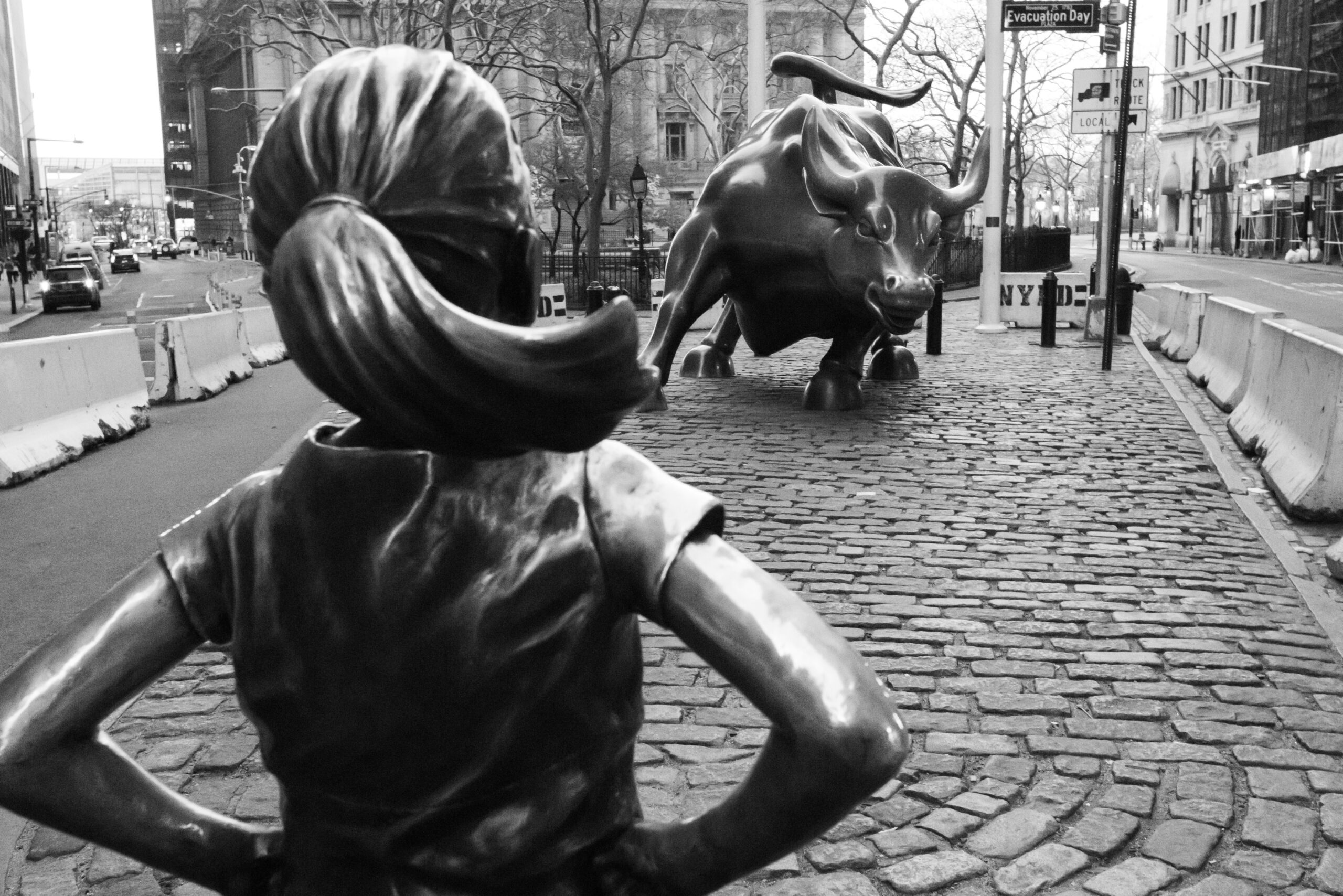
Fearless Girl, Photo: Daniel Lloyd Blunk Fernandez, Unsplash
Burger King’s Moldy Whopper (2020) – Proving a Point
Burger King makes appearance in this blogpost again with a different campaign, 16 years after Subservient Chicken. In 2020, Burger King revealed the “Moldy Whopper” campaign: a series of time-lapse images showing a burger decaying and growing mould over 35 days. This bizarre visual aimed to emphasize Burger King’s move to remove artificial preservatives from its food.
It was not a pretty site, and some viewers were put of, but many also praised the honesty and creativity. The campaign amassed approximately 8.4 billion media impressions globally in first couple of months. In the days after launch it trended on Twitter and was featured in thousands of news articles. According to the company, 88% of the media coverage was neutral-to-positive despite the “icky” subject. Post campaign surveys found that awareness of company’s preservative-free policy was 50% higher than even Burger King’s Super Bowl ad the year prior.
To be clear, this was not guerilla marketing in its most primal form. Campaign had some traditional rollout and media buy. It launched online but was supported by outdoor posters in various countries. That said, the engine was still guerrilla. The idea did the work.
The psychological mechanism:
- Cognitive dissonance and discomfort.
In Conclusion
As an addition to the first part of our blog, these campaigns illustrate the outsized impact guerrilla marketing can achieve through applied psychology principles. Each example found an unconventional, cheeky, creative way to engage the public, but the underlying mechanisms were the same:
• Make people look twice.
• Give them an emotion strong enough to share.
• Let crowds multiply the moment.
• Bring on a little discomfort.
• Deliver novelty that feels rewarding.
Even a super low-budget or an offbeat idea can generate a lot of attention and tangible sales lifts, policy shifts or become part of pop culture discourse. Way beyond what traditional advertising can achieve on the same budget.
Sources: the above information is based on publicly reported case studies and data from campaign analyses, including box office and web traffic figures, social media and earned media metrics, and statements from companies or research firms on the results of these marketing campaigns.